


 by
by 

/location_photos/data/14653/original/china-2000x800-1776256860.jpg)
Gay Guide China
 China Gay Pride: May 31 - June 29, 2027
Written by
Marc Dedonder
Marc Dedonder
May 02 2026
Gay China is one of the world's most complex and most rapidly changing LGBTQ+ travel contexts - a country of 1.4 billion people that decriminalized homosexuality in 1997 and removed it from the list of mental disorders in 2001, and that has both a genuine and active urban gay scene in Beijing and Shanghai, and a political environment that has become significantly more restrictive toward LGBTQ+ visibility since 2018. I cover China for misterb&b with both honesty and enthusiasm: Beijing's Sanlitun and Dongdan areas, and Shanghai's French Concession and Jing'an neighborhoods, have established gay scenes with bars and saunas that operate in a context of tolerated but officially unacknowledged LGBTQ+ life. Pride events have been suppressed, LGBTQ+ content on Chinese social media has been systematically removed, and civil society organizations working on LGBTQ+ rights face increasing pressure. At the same time, China's gay community - particularly in its major cities - is active, visible within its social spaces, and genuinely welcoming to international LGBTQ+ visitors who navigate its context with awareness. Gay travel in China means the extraordinary richness of one of the world's great civilizations alongside an honest understanding of a political environment that does not officially recognize LGBTQ+ existence. This data is exclusive to misterb&b and is not available on any other platform. For maximum comfort and peace of mind, booking LGBTQ+-verified accommodation through misterb&b is always recommended. 🏳️🌈
1997
China decriminalized homosexuality in 1997 and removed it from its list of mental disorders in 2001. Active gay scenes exist in Beijing and Shanghai. The political environment for LGBTQ+ visibility has become significantly more restrictive since 2018 - Pride events have been suppressed and LGBTQ+ content censored online. misterb&b - data exclusive, 2026.
Essential context - understanding China's LGBTQ+ environment
China's approach to LGBTQ+ life is characterized by a concept that scholars and community members describe as "don't ask, don't tell" - homosexuality is not actively prosecuted, but it is also not recognized, protected, or officially permitted to be visible in public discourse. This creates a context of tolerated but officially invisible LGBTQ+ life: gay bars and saunas operate in major cities, a vibrant gay community exists online and in social spaces, and international LGBTQ+ visitors navigate without specific legal risk - but within a political system that can and does use its authority to suppress any LGBTQ+ expression it considers politically inconvenient. Since 2018, that tolerance has narrowed significantly: Pride events in Shanghai and Beijing have been shut down, major LGBTQ+ social media accounts have been suspended, student LGBTQ+ groups at universities have faced pressure, and organizations working on LGBTQ+ rights have closed. The full picture is in the is China safe for gay travelers guide. Reading it before any trip is recommended.
Gay destinations in China
|
China's capital and its dominant gay destination. The Sanlitun and Dongdan areas concentrate Beijing's established bars and saunas. A city of imperial grandeur, hutong alleyways, and an active LGBTQ+ community that has maintained its spaces despite increasing political pressure. |
China's most cosmopolitan city with an internationally connected gay scene in the French Concession and Jing'an neighborhoods. Shanghai's character as China's global commercial hub creates a somewhat more open social environment than Beijing. |
Guangzhou and Chengdu Guangzhou in southern China and Chengdu in Sichuan each have smaller but active LGBTQ+ communities. Both cities have scenes that draw visitors from across their regions and from international travelers. |
Gay Beijing - Sanlitun and Dongdan
Beijing's gay scene is concentrated in two areas: Sanlitun - the internationally connected bar district in the Chaoyang neighborhood - and Dongdan, which has historically been Beijing's most established gay cruising area. The bars in these areas operate with a level of visibility that reflects the unspoken tolerance that characterizes China's "don't ask, don't tell" approach. Saunas have been a particularly established part of Beijing's gay scene, with high search performance reflecting consistent visitor interest. For the full city guide, the gay Beijing guide covers current operational status of all venues.
Gay bars and nightlife in China
China has 50+ verified gay bars and clubs on misterb&b - concentrated in Beijing and Shanghai, with additional venues in Guangzhou and Chengdu. Chinese gay nightlife has a distinctive character - the private room culture of KTV and the more intimate bar scenes of Sanlitun and Shanghai's French Concession reflecting the broader culture of semi-private social spaces. For the full verified list, the gay bars in China guide covers current addresses - editorial verification of operational status is especially important in China's evolving regulatory environment.
Gay saunas in China
China has 58 saunas and cruising venues referenced on misterb&b - concentrated in Beijing and Shanghai. Beijing's sauna scene draws particularly strong search traffic with exceptional click-through rates, reflecting a well-established visitor demand. The gay saunas in Beijing guide covers all verified venues with current operational status.
Gay hotels in China
misterb&b lists LGBTQ+-verified accommodation across China - from Beijing's Sanlitun and Dongdan area hotels to Shanghai's French Concession boutique properties and accommodation in Guangzhou and Chengdu. Browse gay hotels in China and gay BnBs in China for the full selection. Booking through misterb&b provides individual verification of each host's welcome - particularly meaningful in a country without anti-discrimination protections.
Browse LGBTQ+-verified accommodation across China - from Beijing's Sanlitun to Shanghai's French Concession.
Book your China stay on misterb&bConnect with gay travelers and Chinese locals on Weere - 1,000,000+ members worldwide - before your trip. 🏳️🌈
Frequently asked questions - gay China
Should I book LGBTQ+-verified accommodation when traveling in China?
Yes - particularly in China. With no anti-discrimination law and an increasingly restrictive political environment for LGBTQ+ visibility, booking through misterb&b provides the most reliable assurance that your host has explicitly chosen to welcome LGBTQ+ guests. This data is exclusive to misterb&b and is not available on any other platform.
Is China gay-friendly?
In Beijing and Shanghai's established gay venues and neighborhoods, the experience for LGBTQ+ visitors is broadly welcoming within those spaces. The national picture is more complex: homosexuality is not criminalized, but it is also not recognized or protected. Since 2018, the political environment has become significantly more restrictive - Pride events suppressed, LGBTQ+ social media censored, civil society organizations under pressure. The full assessment is in the safety guide.
What is the gay area in Beijing?
Beijing's gay scene is primarily concentrated in two areas: Sanlitun in Chaoyang - Beijing's most internationally connected bar district - and Dongdan, which has historically been the city's most established gay cruising and bar area. Both operate within the tolerated but officially invisible space that characterizes Chinese LGBTQ+ life in major cities.
Is Shanghai more open than Beijing for gay travelers?
Shanghai has a reputation as somewhat more cosmopolitan and internationally open than Beijing - a consequence of its historical role as China's commercial and financial gateway to the world. The French Concession gay scene in Shanghai has an international character that reflects this. In practice, the political restrictions on LGBTQ+ visibility apply throughout China, and the practical experience for LGBTQ+ visitors in the established venues of both cities is broadly similar.
Has the situation for LGBTQ+ people in China improved or worsened recently?
Worsened significantly since approximately 2018. After a period of relative opening in the 2010s - when Pride events in Shanghai and Beijing attracted thousands, LGBTQ+ social media communities flourished on Weibo and WeChat, and some corporations ran visible Pride campaigns - the political direction has reversed. Major LGBTQ+ online accounts have been suspended, Pride events have been prevented, university LGBTQ+ groups have been dissolved, and organizations working on LGBTQ+ rights have closed. The bars and saunas in Beijing and Shanghai continue to operate, but in a more constrained and less visible environment. Source: Human Rights Watch China 2025; ILGA World 2025.
Sources: misterb&b exclusive travel data, 2026 | ILGA World State-Sponsored Homophobia 2025 | Human Rights Watch China 2025 | Chinese Criminal Law (1997 amendment) | misterb&b Search Console, Jan 2025 - Jan 2026


Booked 18 times
Private room •
Shanghai
Wi-Fi • Hot tub • Air conditioning
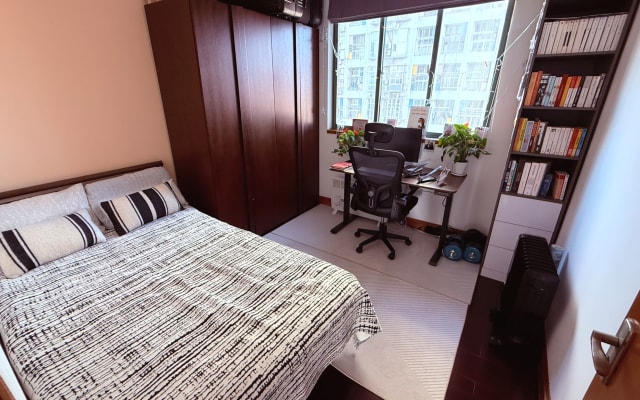

Booked 3 times
Private room •
Jing'an
Clothing optional accepted • Happy to share local tips • Gym nearby
/location_photos/data/14407/original/beijing-misterb-b-copyright-see-ming-lee-flickr-min-1758615321.jpg)
/location_photos/data/14490/original/shanghai-1600x600-1770302495.jpg)


Ready to make friends, join activities, or find dates in China?
Join our thriving LGBTQ+ community of 1M and start connecting!

China: The best gay-friendly hotels
Welcoming
Instant booking

Hotel •
***
Jinjiang
Wi-Fi • Restaurant • Elevator
Welcoming
Instant booking

Booked 2 times
Hotel •
***
Shanghai
Wi-Fi • Parking
Welcoming
Instant booking

Hotel •
***
Xi'an
Wi-Fi • Bar • Elevator
Welcoming
Instant booking

Hotel •
*****
Huai'an
Wi-Fi • Parking • Gym
Welcoming
Instant booking

Hotel •
****
Shanghai
Wi-Fi • Restaurant • Elevator
Welcoming
Instant booking

Hotel •
Haikou
Wi-Fi • Parking • Pets allowed
Welcoming
Instant booking

Hotel •
****
Beijing
Breakfast included • Wi-Fi • Parking
Welcoming
Instant booking

Hotel •
****
Zhangjiajie
Wi-Fi • Pool • Parking
Welcoming
Instant booking

Hotel •
***
Beijing
Wi-Fi • Parking • Gym
Welcoming
Instant booking

Hotel •
****
Guangzhou
Wi-Fi • Pool • Hot tub
Welcoming
Instant booking

Hotel •
****
Hangzhou
Wi-Fi • Parking • Restaurant
Welcoming
Instant booking
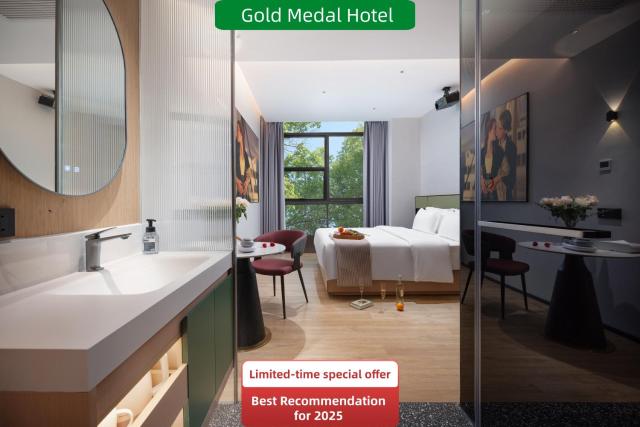
Hotel •
****
Guangzhou
Wi-Fi • Parking • Gym
Want to promote your business in our guide?