


 by
by 

/headlines/pictures/280/original/croatie-dubrovnik-laurence-ogiela-1465982962.jpg)
A true seaside paradise only two hours from Paris, Croatia has 6,000 kilometers of coastline and 1,185 islands and islets, of which only 67 are inhabited. A link between Southern and Eastern Europe, the most Mediterranean of the Balkan countries, with its medieval cities, its preserved islands and itswith its medieval cities, its preserved islands and its translucent water at 30 °C, is a dream for cruisers and yachtsmen.
Because the best way to discover the many Dalmatian islands is by boat. Sailors at heart will rent a sailboat with or without a skipper, while the more economical will opt for the regular ferry connections that link the large islands of the Adriatic to each other and to the mainland. The program for everyone: secluded coves, guaranteed sun and turquoise blue sea.
Split is an excellent starting point for an excursion to the Dalmatian islands. Especially since the city is beautiful. It developed in the heart of the immense palace of the Roman emperor Diocletian, before invading the surrounding hills in an ancient and modern architectural puzzle. You will enjoy getting lost in the maze of ancient streets and discovering cafés set up in a courtyard, in staircases or in a hidden square. In the evening, you should take a walk on the Riva, the old French quay, where young and old indulge in their favorite sport: the passeggiata.
Head for the islands
The islands of South Dalmatia, each more wooded, famous and popular than the other, are spread out along the coast between Split and Dubrovnik. Head south to the Croatian Saint-Tropez: Hvar. A vacation spot for the international jet set, just like Mykonos or Porto Cervo in Sardinia, Hvar no longer counts the number of billionaires' yachts that dock in its main port every summer. Among the regular jet-setters: Tom Cruise, Gwyneth Paltrow, Giorgio Armani, Kevin Spacey, Caroline of Monaco and even Prince William of England.
It must be said that the natural beauty of the island has always attracted the crowned heads. Empress Sissi already came to rest in the famous Palace Hotel, at the time when Dalmatia was attached to the Austro-Hungarian Empire. This was enough to attract gays of all kinds.
"Hvar is considered the most gay-friendly place in Croatia. In a country that is still largely homophobic, gay weddings, honeymoons and even an LGBT conference have been held here," says Jozo, a native of the island. There are no gay venues to speak of, but the community meets at the ultra-cool Carpe Diem bar and hits on the naturist beaches of the Pakleni Islands, especially Stipanska and Jerolim.
<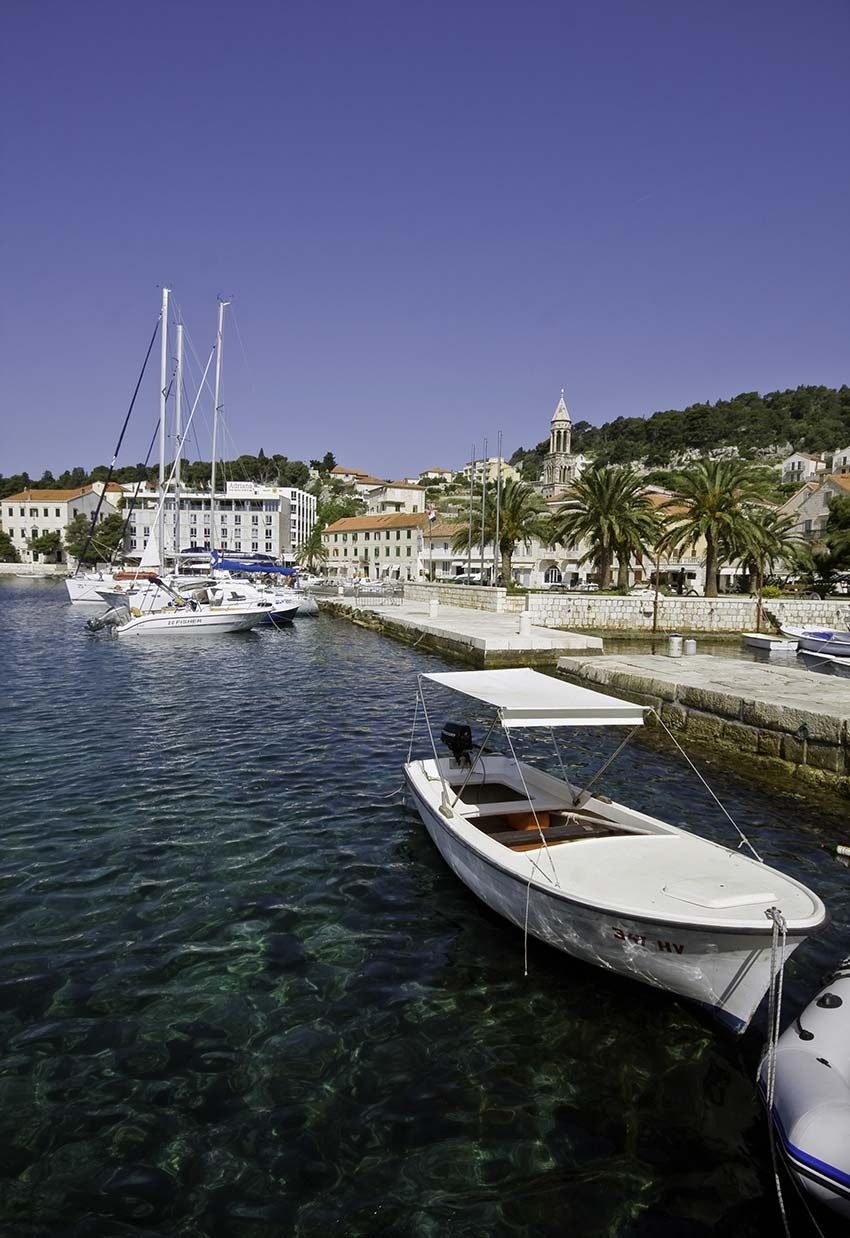
a few minutes by water cab from the port of Hvar, the Pakleni Islands contain dozens of coves with crystal clear waters bordered by pine forests. A paradise for naturists, they are among the many places throughout Croatia where you can swim naked. Another popular "beach" for swimming and meeting people is Bonj. A terrace equipped with deckchairs and bathing cabins in the old style, quite Deauville in spirit.
From Hvar, you can go to the neighboring islands. The closest is Brac. It is home to the seaside resort of Bol and its famous beach of Zlatni Rat, reputed to be the most beautiful in Croatia. It has the peculiarity to advance 500 meters into the sea and to change its shape according to the tide.
South of Hvar, Korcula is one of the most wooded islands in the Adriatic: three hundred year old cypresses, holm oaks, Aleppo pines, olive trees, orange trees... A real Garden of Eden dotted with pretty villages with medieval architecture. Are you looking for peace and inspiration? Go to Vis, the island farthest from the coast. Forgotten by the tourist flow, it owes its preservation to the presence until 1989 of a military base of the Yugoslav army which made it inaccessible.
A trip to Dalmatia cannot end without a stop in Dubrovnik. A pedestrian city, it is approached by the inevitable Stradun, a large central avenue paved with white flagstones and lined with patrician houses, before getting lost in its labyrinth of multi-storey streets. We always end up on the ramparts. You might as well take the opportunity to walk along the ramparts, admire the view of the honey-colored tiled roofs and stop at the Buza Bar, an estaminet on the side of the rock, facing the sea.
From there, you can imagine the city resisting the waves of invaders who have constantly coveted it without ever submitting it. In the past, the Arabs, the Normans, the Venetians, the Ottomans, and today the Germans, the British and the Italians.
If Dubrovnik and the Dalmatian coast were relatively spared by the Serbo-Croatian war, how long will they resist the onslaught of real estate developers and the tourist invasion?


Experience a More Welcoming World
Cozy apartments, private rooms and amazing homes: be welcomed by the gay community in over 200 countries
Apartments, rooms, homes: be welcomed by the gay community


Wherever you're headed, don't forget to add us on Instagram, Facebook and Twitter and share your travel pictures using the hashtag #ExperienceYourPride. We'll share the best pics with our global LGBTQ+ travel community! Share your host story or Local Tips about what to do in your city, and make a video to promote your listing. Interested? Then just email us at stories@misterbandb.com and we'll get back to you.
/headlines/pictures/4460/original/the-geography-of-gay-desire-1776267445.jpg)
/headlines/pictures/4461/original/brazil-the-new-global-7-for-lgbtq-travel-1776267473.jpg)
/headlines/pictures/4462/original/77-1776266245.jpg)
/headlines/pictures/4458/original/when-to-book-for-pride-2026-1776266325.jpg)
/headlines/pictures/4463/original/cover-letter-gayborhoods-1776253391.jpg)
/headlines/pictures/758/original/hvar-le-saint-tropez-croate.jpg)